What does it really take to turn a book into a meaningful credibility asset for your personal brand?
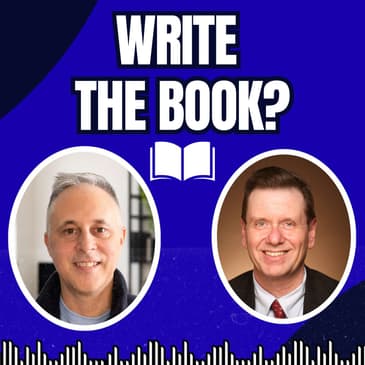
In this episode of My Tog Blog About Awesome Content Creation, host Tim Krywulak is joined by Terry Whalin, acquisitions editor at Morgan James Publishing and the author of more than 60 books.
They talk about the realities of getting a book published, including the differences between traditional, self, and hybrid publishing; why the proposal stage matters so much; and what authors need to consider before committing months or years to a book project.
Terry also shares practical insights on building an audience, choosing the right publishing path, working with ghostwriters, using AI responsibly, understanding the real costs involved, and taking responsibility for marketing your book once it’s out in the world.
A big theme in this conversation is that writing the book is only part of the job. If you’re a content creator, entrepreneur, or professional who has thought about writing a book to support your brand, this episode offers a grounded look at what the process really involves.
Episode Link ⬇️
Get Terry Whalin's publishing offer.
Thanks for listening!
If you want a more practical way to turn ideas into consistent creative momentum, join the Creator Systems Newsletter. You’ll get actionable prompts, small challenges, and useful resources designed to help you create without having to start from zero every time.
Join the Creator Systems Newsletter
Have a question, comment, or idea for a future episode? Connect with me on LinkedIn or send me a message through MyTogBlog.com.
And if you’re looking for creator tools, resources, or merch, you can explore the MyTogBlog shop.
[00:00:00] Tim: What do Alex Hormozi, Gary Vaynerchuk, and Sean Cannell all have in common? In addition to being content creators with huge audiences, they've all published books.
[00:00:09] That tells us something. These creators clearly see value in having a published book as part of their personal brand.
[00:00:14] Authoring a book can go a long ways towards establishing your authority on a particular topic. It can give you a body of ideas you can draw from and expand into social media posts, blogs, videos, podcasts, and other content, and it can even open doors to speaking opportunities, podcast appearances, and industry events.
[00:00:31] But the key is what you do with it. You still have to decide on the right topic, know who the book is for, pick the right publishing channels, and then figure out a strategy to get that book into the right people's hands.
[00:00:42] That's why in this episode I'm so glad to have the chance to speak with Terry Whalen. Terry's had his work published in more than 50 different magazines. He's also authored more than 60 books, several of which have sold over 100,000 copies. Today, he's acquisitions editor at Morgan James Publishing, which is headquartered in Manhattan, New York.
[00:00:58] And in our conversation, Terry and I discuss the realities of book publishing, the different pathways you can take to getting your book published, and the practical steps that content creators can take to give their books the best chance for success.
[00:01:10] So if that sounds good, then let's get into it!
[00:01:12]
[00:01:17] Tim: Hey, Terry. Welcome to the show.
[00:01:19] Terry: Tim, great to be here with you.
[00:01:21] Tim: I was wondering if you could just start with what's one of the biggest publishing myths that prospective authors need to be aware of?
[00:01:28] Terry: Yeah, Tim. As I think about it, I mean, I list 10 great publishing myths, but as I really-
[00:01:32] think about it, there's really one that, is probably overarching here, but it's not, not really explicitly said in my book these days. But I guess the myth that I'm thinking of is unrealistic expectations that the author- Mm-hmm ... has, because almost every one of these myths ties to that. I mean, I've been in book publishing a long time.
[00:01:55] One of the things I've learned is that so much of the process is outside of anything I can control as an author, so- Right ... I can't make a bookstore buy your book. I can't make a reader go in there and buy your book. Mm-hmm. I mean, there's, there's lots of things outside of my life that I can't control in this process.
[00:02:17] So part of the reason I wrote this book was to give authors practical ideas of things that they could do-
[00:02:25] Tim: Mm-hmm ...
[00:02:26] Terry: that could really make a difference out there. Because what I've learned is that I can't control anybody else outside of myself, and so I have to work on my own part in this, and that's part of why I did this.
[00:02:39] Tim: Yeah, absolutely. That's a good thing for any kind of, content creator to keep in mind. You know, we publish a YouTube video or a podcast, and it's kind of out there and, and there's things we can control, but there's a lot that, we can't and- We've gotta focus on what we can. And so you talked about unrealistic expectations. What does that usually look like in, in practice?
[00:03:01] Terry: Well, in practice that author assumes all kinds of things when they publish the book. I mean, generally there's, there's three paths to- Mm-hmm ... to get published. You can, you can go the traditional route, which I've, I've done a lot through the years.
[00:03:17] Tim: Yeah.
[00:03:18] Terry: You can go the self-publishing route, which- Mm-hmm ... I've done once through the years. Uh-huh. And then there's the independent publishing route, a hybrid, which is really- Right ... a blend of, blend of both. And, and so even when you make that choice between those three, that's, that's a pretty big choice that you're making there.
[00:03:38] Mm-hmm. And people do it for all kinds of different reasons, but I think You know, there's pluses and minuses to each, each of those different paths, and so that's, that's all the behind the scenes stuff that people just make a choice. You know? Right. They don't really think about all the ramifications of what they're doing there, so.
[00:03:58] Tim: Yeah, definitely wanna get into those paths. but kind of one follow-up question on that is like what, what's the reason to publish a book? Like what, what do... What's the benefit for authors? Let, let's say you're a content creator, and you've already got a podcast, you've already got a YouTube channel.
[00:04:16] Why publish a book? How does that add to your business, I guess?
[00:04:20] Terry: The reason to publish a book is because that gives you a definite authority in the, in the process. You're, you're, you're an expert, in your, your topic that you've chosen, and that opens up podcasts like this, it opens up-
[00:04:36] speaking opportunities, it opens up guest blog posts, magazine articles- Mm-hmm ... all different kinds of things that you didn't really have the opportunity to do without a book. But, but the fact that you've written a book makes you an authority in that area, and so people will book you because you have a book out there.
[00:04:57] Tim: Yeah. Does it matter, like, how many copies it sells? Or like, do you have a target in mind usually when you're working with an author of, of how many, how many copies you, for them to sell?
[00:05:08] Terry: Well, naturally we all wanna sell as many as we can sell, but it's, it's all over the map.
[00:05:14] And like I, like I said originally here, it, it depends on that author and what that author's gonna do, their, their visibility, all that kind of thing. I know with what I do at Morgan James Publishing, we're a New York publishing house. Mm-hmm. We're doing somewhere between 150 and 180 books a year. Mm-hmm. And so as I talk to different authors, some of them, you know, are trying to do a lot, some of them are gonna do a little.
[00:05:37] I know as a publishing house, our general goal is to try to sell, you know, 4,000 copies of the book, during the first couple years. Mm-hmm. Because if we reach that 4,000 mark, that's when we become profitable as a, as a publishing house on, on the book, no matter what they, what they do.
[00:05:57] Yeah. But, but getting to that 4,000 number is a lot of work for everybody involved to actually get the book out there and make that happen.
[00:06:07] Tim: Yeah, definitely. Like I, I could see it would be like a, a joint effort with the, with the publisher, the, the creator, maybe their, their marketing team. What would you recommend in terms of how they prepare to see if they're ready to pr- produce a book or not?
[00:06:23] Terry: Yeah, I guess always the first step that I usually take with a book project, whether it's fiction or nonfiction, is I encourage people to do something within the publishing world we call a book proposal. Right. And these book proposals are a lot of work.
[00:06:38] I freely admit that, to do that. I've written two book proposals that received six-figure advances, so it is possible- to really get your book out there and achieve something like that. But these proposals are important because- they have information in them that's not really in your manuscript.
[00:06:57] What are you gonna do as, as a content creator to, to market your book and- Mm-hmm ... get it out there? Why you of all the people in the world? Those are the kind of questions you're asking. What, what are comparable titles to- Right ... what you're pitching here? There's a whole series of things, and, I know as an acquisitions editor, years ago when I worked inside the publishing house, I didn't get...
[00:07:22] A lot of times they were, somebody was missing one of the important elements in that proposal.
[00:07:28] Tim: Mm-hmm.
[00:07:29] Terry: And so what I did as a frustrated editor, I made this book called- Wow ... Book Proposals That Sell: 21 Secrets to Speed Your Success.
[00:07:37] And this book has over 150 five-star reviews. People- Mm ... have used it to get like a $50,000 advance, to get an agent. All kinds of great things have happened from this. But that's really where I would start. And- Yeah ... anybody can get a free copy of this, this book if you go to bookproposals.ws- Amazing ... for website.
[00:07:58] And we give that away at Morgan James because- Mm-hmm ... we've learned that if you get that e-book version of my book and start to read that, there's a high probability you're gonna turn and buy the print copy of the book.
[00:08:12] Tim: Right.
[00:08:12] Terry: So I don't lose anything by giving away the e-book. And actually, we give our authors those e-book, those email addresses so they can develop their relationship with you, grow- Mm-hmm
[00:08:24] grow their relationship with you. So it's a, it's sort of a unique marketing thing that we're doing to help our authors in that, in two areas.
[00:08:32] Tim: Yeah ...
[00:08:32] Terry: to grow their email list, but also to drive print book sales because, I mean- Hm ... worldwide they've pretty much proven, everybody thought e-books were gonna take over the world, you know, when they came out.
[00:08:43] Right. But, but basically worldwide it's pretty much 80/20. So 80%- Yeah ... 20% books, 20% e- e-books. So e-books are not gonna take over print at this point- No ... we can see.
[00:08:56] Tim: No. Certainly any, anytime you get over about 20 pages, I always wanna switch from digital format to, you know, a real book
[00:09:05] Terry: Absolutely
[00:09:05] Tim: I did a post the other day about how like I even print e-books often 'cause I wanna underline stuff, I wanna write in the margins.
[00:09:12] I like the tactile- Sure ... quality of a book, so-
[00:09:15] Terry: Makes
[00:09:15] Tim: sense ... can appreciate that. And, yeah, I'd... I can, understand how much work it can be, but I think you can get like a lot out of it even if you, even if you don't sell your book to that particular publishing house, you can get so much more clarity about what you're trying to do by putting a book proposal together.
[00:09:33] I'd s- it's, I'd, I'd recommend it for anyone that's, that's thinking about that, and that, that sounds like a great resource.
[00:09:39] Terry: Yeah, and even if you self-publish, at the end of the day, you still- need a lot of that information because you identify, who your reader is, why in the world you're doing this- Mm-hmm
[00:09:48] and all that. You think through all those kinds of issues as you put together this book proposal.
[00:09:52] Tim: And all that's so important because y- the book itself is so much work. Putting that work in on the ground floor means you know what you're putting it out for. You know that it's got a market and, and what you intend to do with it.
[00:10:05] Terry: It is. And, everybody thinks their book is for everybody, but-
[00:10:08] Tim: Right ...
[00:10:08] Terry: that's not true. You know, you- That's true ... I always roll my eyes when I see that. It's like, "Oh yeah, you don't understand that, you know, certain people buy certain books."
[00:10:18] Tim: Yeah.
[00:10:18] Terry: And that, and so it matters, you know, what type of book you are. I mean, people will say their children's book is for- Mm-hmm ... you know, ages, ages two through 20 or two through 18 or whatever. Well, that's not how the children's market works. It's very segmented, so you have to figure out who in the world your audience is and- Yeah
[00:10:39] why in the world you are doing this particular book to this audience.
[00:10:43] Tim: I learned that through, YouTube the hard way. You know? It's like you- your, your videos or your, your content, it's for a specific audience, and the more specific you can make it, the better opportunity you have for actually having that, that content be successful, so.
[00:10:58] Terry: Absolutely. Makes good sense.
[00:11:00] Tim: So what's, how should... Let's say you're going through the process, you've produced a book. How do you measure the success of that book? Like, what are different way, different metrics you can use beyond just volume of copies sold? 'Cause I imagine some books are going to be very niche in terms of their target market, others will have broader appeal, but maybe that's not the only, only way to judge the success of the book.
[00:11:26] Terry: Yeah. Well, one of the things they say commonly in the book business is the very first time to be, the best time to be building your audience is, is today, and the second best time was when you came up with the ideas. So-
[00:11:39] Tim: Right ...
[00:11:40] Terry: so be building that audience for your, for your book, as soon as, as soon as you come up with it.
[00:11:46] So- ... that means, having a, a platform of some kind, having some connection to them. Primarily the best way would be through your email list because that's- Right ... that's something you control, and so that's a metric right there is- Mm-hmm ... how big is your email list? How can you grow that email list?
[00:12:05] What kinds of things are you doing to add people to that list? Right Keep them there, all those kinds of things. So, so yeah, there's, there's a lot of different metrics you can use. One of the things I've figured out in publishing, and it's taken me a long time to understand this, but there, there is no, you know, one, two, three-
[00:12:24] steps to, to publish a successful book.
[00:12:27] Tim: Right.
[00:12:28] Terry: If we knew what those steps were, every book would be a bestseller, and that's not- ... really how it happens. I mean, even in my, my "10 Publishing Myths" book that we're talking about today, Jerry B. Jenkins is a long-term friend of mine- Mm ... wrote the forward for this book, and Jerry has been on The New York Times list 21 times.
[00:12:48] Tim: Wow.
[00:12:48] Terry: And in the book, in the forward of the book, he talks about how, Left Behind that he wrote with Tim LaHaye, it's, it's actually sold over 63 million copies at this point. Hmm. Amazing. And still continues... I mean, 20 years after the book, it still continues to sell, like, 10,000 copies a month. Well, he knows that writing that book was almost like, like winning a lottery, you know?
[00:13:14] Because- Mm-hmm ... that was his 125th book. So, so it wasn't like he's just starting, you know, to do this thing. Right. In other words Even he can't predict really what, what is gonna happen. You just have to, you know- Yeah ... go with, with what's in front of you and, get it out there in the best way possible and see what happens.
[00:13:36] Tim: I think it's a great example too about how, you know, it takes time. Like it'll happen quickly for some people, but for other people, you know, it'll take longer and, you know, it's hard to write a successful book.
[00:13:49] Terry: It is. And you have to work with people that understand that it, it might not be instantaneous.
[00:13:56] Tim: Mm-hmm.
[00:13:57] Terry: That's one of the things I like about what we do at Morgan James is we're still coaching and helping authors that came to us in 2005.
[00:14:05] Tim: Right.
[00:14:06] Terry: So we're, we realize you gotta take the long view on this stuff- Mm-hmm ... because none of us really know what, what's gonna catch fire out there.
[00:14:16] Tim: So when you're, We, we talked about those different paths, the self-publishing, the traditional publishing. What, when does it make sense to go, for each one? How do, how do you advise people on, on that?
[00:14:31] Terry: Yeah. You know, lots is changing out there in the publishing world, I guess is what I'd tell you. To go the traditional route is, is often time-consuming and pretty difficult, I guess- Mm-hmm ... I'd say these days. Publishers are having a higher and higher standard. They're looking for authors that have greater and greater connections. Right. Agent... You have to have an agent usually to go the traditional route.
[00:14:56] Agents are quite picky as gatekeepers because they take on the stuff, they send it out- Yeah ... and it doesn't sell, and so that doesn't help them. They don't make any money if that doesn't happen.
[00:15:07] Tim: Right.
[00:15:08] Terry: So, you know, it's hard out there on the traditional side. Very possible still, but-
[00:15:13] Tim: Mm-hmm ...
[00:15:14] Terry: the self-publishing route is also has its challenges because, you do it all yourself.
[00:15:19] Tim: Mm-hmm.
[00:15:20] Terry: And, or maybe you hire somebody to do it, and then- Right ... you're, you're establishing a track record with what's going on because if... There's this expensive scr- subscription service called Nielsen BookScan that- author, publishers have access to.
[00:15:36] Right. So they can look in Nielsen BookScan and see that your self-published book has only sold 100 copies, you know- Right ... over the last couple years it's been out. So that's gonna affect what you do in the future with- Right ... with publishers and everything. The third route that I'm really working in, in, in Morgan James, it's really more in the hybrid independent publishing area.
[00:16:00] We're distributing our books into 98% of the bookstores in North America- Hmm ... including the brick-and-mortar stores. So very broad distribution, I think, is one of the keys. We also allow authors to keep all their rights. Hmm. They grant us exclusive right to sell it in the bookstore.
[00:16:17] Tim: Mm-hmm.
[00:16:18] Terry: Our contract's pretty simple. It's only four pages.
[00:16:21] Tim: Hmm.
[00:16:21] Terry: I understand the typical Simon & Schuster contract's running about 50 pages these days. So, you know, you can imagine they take every possible intellectual property right.
[00:16:31] Tim: Right.
[00:16:32] Terry: So, you just have to choose wisely, I guess, is what I'd say.
[00:16:36] Each of these paths, I encourage authors to explore each one-
[00:16:40] Tim: Right ...
[00:16:40] Terry: to see what's the right one for them, and it'd be different for every person type thing.
[00:16:45] Tim: Yeah, and I would think being in the bookstore, that is part of the, the credibility asset that you get out of it, right? It, it's... I th- to me, I, I guess I still th- think of it as different than I published this e-book and it's available, you know, through my website versus, you know, you could go to Indigo or, you know, Barnes & Noble or wherever and, and you can buy my book.
[00:17:07] Terry: It is. It's a different take. And Morgan James, I mean, like I say, we're, we're publishing books all over the world. We have distribution in the United Kingdom, in Australia, airports. Mm-hmm. You know, we're doing all kinds of stuff. I mean, I, I wrote a biography on Billy Graham that came out a few years ago.
[00:17:23] Hmm. And I went to a conference in Hershey, Pennsylvania, and I missed my connection in the Philadelphia Airport. Hmm. Had to spend the whole day in the Philadelphia Airport. And out of sheer boredom- ... I walked in that airport bookstore and I found my Billy Graham book-
[00:17:38] Tim: Nice ...
[00:17:38] Terry: inside that airport bookstore, which, you know, I've written over 60 books.
[00:17:42] I'd never, I'd never seen one of my book inside an airport bookstore. So I took a picture of it, but it turned out back then Morgan James had put my book into 25 airports. Oh. And Philadelphia happened to be one of those airports. So, you know, all those choices-
[00:17:57] Tim: Mm-hmm ...
[00:17:57] Terry: are possible out there for authors.
[00:17:59] Right. You just have to find the right one for you.
[00:18:02] Tim: Absolutely, yeah. That'd be a nice surprise, finding your book.
[00:18:06] Terry: It was fantastic.
[00:18:07] Tim: So when does it make sense to work with like a, a traditional publisher? 'Cause it seems like there are a lot of barriers there.
[00:18:14] You mentioned the agent, you mentioned the long contracts. W- when would that make sense still?
[00:18:20] Terry: Well, it makes sense to work with them if time is no issue for you- Mm-hmm ... for one thing. Often their schedules are 18 to 24 months out- Right ... on when they're gonna publish their book. They take over the control of the book.
[00:18:34] They're gonna pick the title, the cover-
[00:18:37] Tim: Hmm ...
[00:18:37] Terry: write the back cover copy, do the editing. Right. They're gonna figure out where it's gonna be distributed, all the, all those kinds of things, because they- Mm-hmm ... believe, right or wrong, that they know more than you do, so they're gonna, they're gonna take advantage of all that.
[00:18:51] Yeah. But traditional, I mean, you know, they're, that's how people get, get on these TV talk shows and-
[00:19:00] Tim: Right ...
[00:19:00] Terry: like the Today Show or Good Morning America. Those kinds of things happen because they generally pick books that are published by traditional publishers.
[00:19:10] Tim: Right.
[00:19:11] Terry: There, there's a lot of advantage to going over there disadvantages to, to each, each side, I guess is what it says.
[00:19:19] Tim: Yeah. With the hybrid approach you're talking about, I imagine, like do you provide that kind of support for authors as well in terms of like advising about the title, the, the cover, those kind of aspects of the process?
[00:19:31] Terry: We
[00:19:32] Tim: do.
[00:19:32] Terry: Morgan James, we work with them on all those different aspects, what, what the price of the book is, what the size of it is- Yeah
[00:19:40] when's it gonna release, all those, all those kinds of details. We- Yeah ... we do work with them on that. And I think that's one of the advantages to going with, going with somebody like us. You get your book out there broadly- Yeah ... into the market. We, we advise you about different, you know, public relations groups to, to work with.
[00:20:00] You can imagine- Mm-hmm ... some of those are better than others.
[00:20:03] Tim: Right.
[00:20:04] Terry: I remember years ago, I, I published this book, with this guy that had... His co-author had sold his, sold his waste management company for like $30 million or so, and so- Mm ... they had a lot of money, and so they're, they wrote this book called "The Garbage Man's Guide to Life."
[00:20:20] Huh. Ins- you know, it was like different things that he, he'd learned through that- Right ... through that process. Well, they had some, they had some PR company that they hired for this book who might have been really great about getting people on television-
[00:20:35] Tim: Mm-hmm ...
[00:20:35] Terry: but we had never heard of them before, which is kind of a red flag because-
[00:20:40] you know, we're in the book business. You'd think we'd know the different people that are really good at, at PR, which we do.
[00:20:45] Tim: Right.
[00:20:46] Terry: Ask the questions, you know- Yeah ... is what I would encourage people to do, is ask, ask who they work with, who they recommend, and- ... and find people that really do know the inside track about how to- How to get your book out there, 'cause- Yeah
[00:21:03] they're definitely out, they're definitely out there, but you have to, you have to ask those questions and get with those people for that to happen.
[00:21:11] Tim: Yeah, I could see that being valuable because, like a lot of people might think they know what a good title is or what a good cover is, but they might not really know if they're not in the business, and then same with the, the best marketing channels to use.
[00:21:23] It's always good to have that advice from, from inside the industry.
[00:21:27] Terry: It is. And you know, a lot of these PR firms, Tim, will charge anywhere between 3 and $5,000 a month-
[00:21:34] Tim: Right ...
[00:21:35] Terry: for their services. So you really have to, you know, be wise. Are you getting that kind of return on your investment?
[00:21:42] Tim: Yeah.
[00:21:43] Terry: You know, be, be wise about what you're doing on that, and if, if it doesn't work for you, stop it, you know? I mean- Yeah ... one of, one of my authors who- whose book has been bestselling, but she, she published a new book with us and she said, "Terry," she said, "I invested $50,000 into, into this PR last year."
[00:22:01] Right. And I'm like, "Well, you know, if you're not getting that kind of return, stop." Mm-hmm. Absolutely. You know those words, it's like, don't be doing that, you know- Yeah. Yeah ... if that's not helping you. So all of this, whether you're a bestselling author or just getting started, you need to think about those, those different questions, and make sure you- Mm-hmm
[00:22:20] ask those out there and get, get the best advice you can in the process.
[00:22:26] Tim: Definitely, and that kind of brings up the question of cost, like what are the real costs that an author should plan for if they're... You know, let's say they're going, they're thinking about this hybrid route, 'cause the e-book route, you spend, I guess, as much as you want in terms of like external editor or, you know, a graphic designer or what have you to help you get it off the ground.
[00:22:47] I think the cost of that is kinda knowable, but what about the hybrid route? How much would you plan on budgeting for that?
[00:22:55] Terry: At Morgan James, it's not like we have a lot of different packages for people. So we have a one-time investment that people invest, $6,000 when they sign the contract, and then, we're gonna invest-
[00:23:06] 15, 20, $25,000 into that process. We ask the author to commit to buying, up to 2,000 copies of their own book- at the exact print cost-
[00:23:18] Tim: Right ...
[00:23:18] Terry: plus $3. So that plus $3 times 2,000 is where we came up with that $6,000 number. And part of the reason we do that for every author, Tim, is because we've, we've learned the hard way that if-
[00:23:33] if the author does not invest anything upfront into the book, which is what the traditional market is-
[00:23:39] Tim: Right ...
[00:23:40] Terry: then they don't feel any compulsion to market their own book, which- Right ... seems a little strange, but that's what people do. And we don't sell books if we do that. So part of the incentive reason for them to invest that money is to, is they're actually gonna take the bull by the horns and do something at the end of the day.
[00:24:01] Tim: Yeah,
[00:24:02] Terry: And, and I actually had my own wake-up moment in this, in this area myself. In 2007, I was a literary agent. I had a little agency in North Scottsdale, Arizona, and Mark Victor Hansen, the co-author on Chicken Soup for the Soul- Mm ... invited me to come to, this big event he had in Los Angeles called Mega Book Marketing University.
[00:24:22] Now, at that point in my life, Tim, I'd written about 50 books for traditional publishers. Yeah. So they were making these great books, they were putting them in the bookstore, all that. But when, when you make those kind of books on the traditional side, once a year, maybe quarterly, they'll send you a financial statement- Mm-hmm
[00:24:39] about how your book is doing. All of my books were in the minus category back then Oh. So I wasn't making any money. Right. And I said... I knew I must be doing something wrong, I just didn't know what I was doing wrong. And so- Mm-hmm While I was there at Mega Book Marketing University, I decided to sit there with all 400 people that were there and listen to the speakers and see if I could figure out what in the world I was doing wrong.
[00:25:04] Well, about halfway through the conference, Jack Canfield, the other co-author on Chicken Soup for the Soul, spoke. And Jack has really studied what does it take to be successful as an author. Mm-hmm. He's got this book called The Success Principles that I have on my shelf here that's a best-selling book.
[00:25:22] Well, the very first success principle says that I will take 100% responsibility for my own success.
[00:25:29] Tim: Right.
[00:25:30] Terry: Now, none of us want 100% res- we want somebody else to do it for us. But I decided during this conference that I was gonna change and take 100% responsibility for my own success.
[00:25:42] Tim: Right.
[00:25:42] Terry: Because I realized how little I was personally doing to be telling people about my book.
[00:25:47] Sure, I had a terrywhalen.com website, but I was doing almost nothing else- so back then, this was the early days of blogging, so I started to blog, and I've been blogging consistently since all these years, once a week, and my blog has over 1,800 entries in it.
[00:26:04] Tim: Amazing.
[00:26:04] Terry: About a year and a half ago, I found this article that said, listed the top 27 content producers.
[00:26:11] Tim: Hmm.
[00:26:11] Terry: And it said there were over 600 million blogs that they estimate are out there.
[00:26:15] Tim: Right.
[00:26:16] Terry: But they listed my name as one of those 27.
[00:26:19] Tim: Nice.
[00:26:19] Terry: And it's not that I'm doing anything magical here, Tim, I'm just being persistent and consistent. Yeah. And that's a principle that every writer can do no matter where you are in this process.
[00:26:29] If you're a beginner, if you've been doing this for a long time, be persistent and consistent- Yeah ... because that's what's really gonna pay off for you in the long run.
[00:26:38] Tim: Yeah, definitely can see that as a, content creator, that this, it works by momentum, right? The more that you do- you get better at it and, and you also build up the, this library of content that people can...
[00:26:52] The, the more you have out there, the more people can discover and, you know, the more momentum that you build over time.
[00:26:58] Terry: It does. It's all, part of the process out there-
[00:27:00] Tim: Yeah ...
[00:27:01] Terry: that's for sure.
[00:27:02] Tim: Well, how about, let's say the time investment, which is another cost, people I think often fail to, to plan for sometimes, and sometimes the, the other thing that, that people will opt for is like a ghostwriter, and when does it make sense to engage a ghostwriter as an author, or when does it make, when does it, you know, not make sense?
[00:27:24] Is it... Does it make it less authentic? Does it make it less yours this way?
[00:27:28] Terry: I don't think it makes it less authentic. I think- Mm ... you know, ghostwriters do serve a, a great, great purpose out there. They... I mean, there's these busy, business guys, executives that- Mm-hmm ... really don't have time or the energy to be able to write their own stuff.
[00:27:44] They have great, great stories- Right ... they have great content, and so that ghostwriter can come along, spend a day or two with them, get... You know, do kind of a data dump type thing- Mm-hmm ... and get all those stories on tape, and go away and use those stories to write, write the book and get it out there. So, you know, ghostwriters do have, do have a very strong role in this, in this company- Yeah
[00:28:09] and, or in the, in the culture out there in publishing. But, you know, they cost. Yeah. They're, they're expensive, and so you have to, you have to figure out if that's, that's a route you wanna use, but definitely- Yeah ... you can, you can do that kind of thing.
[00:28:23] Tim: Yeah, it makes sense to me. It's funny how, like, if a director and a writer produce a movie about somebody, nobody says that's less authentic because they had other people involved, but-
[00:28:33] Terry: That's right
[00:28:33] Tim: I guess I'll ask since we're kind of on the topic, what about artificial intelligence? How do you, Like, how does your company manage that?
[00:28:40] Does it... Does it discourage the use of it? Does it see it as a tool that, that helps with the process? Like-
[00:28:45] Terry: And, and you know, we are still at the end of the day looking for original content creators that actually put their fingers on the keys and do it.
[00:28:55] Mm. I guess the very telling thing that I read here in the last few weeks is that even Amazon with KDP is telling people, they can only submit five books a day- Hmm ... rather than 10 or 20. Wow. So what, so what that shows me is that those people are using the artificial intelligence- Yes ... to actually write, write their books in that kind of a rapid state.
[00:29:19] I, I think your book is really gonna stand out if you, you know, do it the old-fashioned way, put your fingers on the keys and, tell, tell the stories and work- Yeah ... with an editor and get it, get it out. I mean, people are using, artificial intelligence to make images, for example- Mm-hmm ... for children's books.
[00:29:38] Well, if you use those, you can't copyright those-
[00:29:41] Tim: Hmm ...
[00:29:41] Terry: interesting ... a real problem for publishers. Yeah. So, so we do have some guidelines about- Yeah ... about all that kind of stuff. I think you can use, you know, you can use artificial intelligence for your, for your research- Mm-hmm ... for comparables. I mean, all kinds of things you can use it for, but-
[00:29:58] Tim: Yeah
[00:29:58] Terry: when it comes to actually making the book, I think I'm just old-fashioned, I guess. I think you should really just keep telling those stories- Mm-hmm ... and, make good stories out of it.
[00:30:08] Tim: Yeah, and I think the storytelling must be... It's always been important, but there must be a real premium on it now, especially with AI, because it's so easy to produce a book about like, you know, 10 tips to get your book published or whatever.
[00:30:24] Terry: Right.
[00:30:24] Tim: Now, but, but to have, somebody's actual experience and the, the in-depth knowledge from the industry, it's gotta be so much more important now, I imagine.
[00:30:33] Terry: It is. And that's why I really tried to make it easy for people to get this book, Tim. I set up a site where if you go to publishingoffer.com, you can get this book for only $10-
[00:30:44] including the shipping, along with over $200 worth of free bonuses.
[00:30:49] Tim: Mm-hmm.
[00:30:49] Terry: And I did this because I want people to get this book and read it. So Publishing Offer, and these... publishingoffer.com. Mm. And these bonuses are not just funky bonuses. I mean, one of the bonuses, for example, is an audio where I interviewed a self-published author who is selling thousands of copies of his book to public libraries.
[00:31:12] Hmm. People don't even think about li- I mean, libraries- Right ... have budgets. They buy books, all that kind of thing. So this author figured that out. He figured out which librarian to reach out to.
[00:31:23] Tim: Mm-hmm.
[00:31:23] Terry: How to sell his book to them, take the order, and then- Hmm ... pack it up after the call and mail it to these people-
[00:31:30] with an invoice. He sold a lot of books doing that kind of thing. Hmm. And but it... I mean, it's, it's work. Right. All this stuff is work, but you have to figure out a method like that that's going to work for you and your book, and then, you know, persist and consist, you know, be consistent like- Yeah ... what we were talking about earlier.
[00:31:50] Tim: Somebody that buys your book, what are they gonna come away with that'll help them become published?
[00:31:57] Terry: I think they're gonna come away with practical information of things that they can actually do. So like, I talk to authors all the time, and they'll say, "Well, my platform is over on YouTube or Facebook- Mm-hmm
[00:32:10] or Instagram- Right ... or LinkedIn." Well, the problem with those places, I mean, they're all good places, but the problem is that I don't own any of those sites. I don't control them. Hmm. I could actually get kicked off of them by- Right ... violating their terms somewhere tomorrow. So you wanna build your stuff on your own website, your own blog, Yeah
[00:32:33] your own newsletter, things that you can control. And so that's what I do in every one of these chapters. I have a, myth buster action that's a practical- step that every author can do. So- work through those and actually take those actions. Like, like one of the myths, for example, is that my publisher will market and sell my book.
[00:32:54] Right. Well, sure, they're going to do their work to sell your book, but their interests are divided is what I'd say at the end of the day. Yeah. Where, I mean, good grief, we're publishing 150 books a year at Morgan James. So we have a very divided mindset- Sure ... in that area. But you as the author, you're focused on one, on your book.
[00:33:16] Yeah. And so take that passion and use that to get up every day and say, "Okay, what am I gonna do to really sell my book at the end of the day?" People forget those Chicken Soup for the Soul books mm-hmm. They were rejected over 140 times before they finally found a little publisher-
[00:33:34] Tim: Hmm
[00:33:34] Terry: in Florida that would publish that first Chicken Soup for the Soul book.
[00:33:38] Tim: Right.
[00:33:39] Terry: They told their publisher they were gonna sell a million books during the first year. Their publisher laughed at them, just like you just did there, Tim.
[00:33:47] Tim: Yeah.
[00:33:49] Terry: It took them a year and a half to sell their first million books.
[00:33:53] Tim: Wow.
[00:33:53] Terry: But those guys practiced something that every author could do, and there's a little YouTube video that I have about this. Mm-hmm. Jack Canfield, called it the rule of five. They got up every day and they did five things- Hmm ... to be telling people about their book. I mean, there's dozens of things you can do.
[00:34:10] Right. They did a, they did a live event, a blog post, a YouTube video. Yeah. I mean, there's all kinds of things, but the fact that they did them over and over and over is really what took that series off. And now- Mm-hmm ... Chicken Soup for the Soul, I mean, it's one of the most prolific series in the English language.
[00:34:29] Tim: Absolutely ...
[00:34:30] Terry: who would've guessed that, you know?
[00:34:32] Tim: There's so many different things you could do, and, and I think it is about just finding, like, what is your thing, what is the thing that's gonna work for you? 'Cause I've, I've seen this certainly with other types of content, like a system that'll work for one creator is not necessarily gonna be the one that works for the other one.
[00:34:49] So it's really about finding that, that, that approach that suits your book and, and its market, and then your capabilities and your comfort level, I guess, as a, as an author.
[00:35:01] Terry: My-- One of my friends is John Kremer, the, the book, bookmarketing.com is his, is his website. Mm-hmm. But if you... He wrote a book called A Thousand and One Ways to Market and Sell Your Book.
[00:35:14] Mm. Now, that book is, like, over 700 pages. I mean, it's a huge book. So Jack Canfield and Mark Victor Hansen got that, got that book. Right. And they tried to do as many of those things as they could. Mm-hmm. Get those different tools out there and, and really use those, those methods to see which one is going to be the best one for you at the end of the
[00:35:36] Tim: Absolutely. Yeah.
[00:35:37] Terry: It's different for all of us, so each of us have to figure out what method is gonna work for you. So that's part of the experimentation, the trial and error thing that all of us are doing in this book publishing world to try to find the right spot.
[00:35:51] Tim: So for creators, what, what is the, a great, platform? Do you have a recommendation of how, like, different success strategies you've seen for people to, promote their book? We, we've talked about different channels- Well- ... but what are some examples of things that
[00:36:08] Terry: I would, I would think, you know, even, even what we're doing here on podcasting, you know, is, is a great place. I started using a tool called, Podmatch-
[00:36:16] Tim: Mm-hmm ...
[00:36:17] Terry: over a year ago. I g- if you go to thepodmatch.com, you can find out about it.
[00:36:22] Tim: Yep.
[00:36:22] Terry: And I've, I've booked or recorded over 80 podcasts in the last year.
[00:36:28] Excellent. Now, I don't have my own podcast, but I'm just, like, guesting on your podcast- Yep ... and then promoting that. So there again, it's, it's strategy. It's thinking about this, trying these different things, see if they actually work for you.
[00:36:42] Tim: Right.
[00:36:43] Terry: But I would say, I'd say podcasting is great. Mm-hmm. Magazine articles- Mm
[00:36:48] is another great way to write your book. People forget, magazine articles, I mean, if you get a printed magazine article, it's very easy to reach 100,000, 200,000- Right ... half a million people with that article. And at the bottom of the article-
[00:37:04] Tim: Hmm ...
[00:37:04] Terry: you can say, "By Terry Whalen, author of-" Right ... "'10 Publishing Myths.'"
[00:37:08] Tim: Right.
[00:37:08] Terry: So you lead people to your book in that process. I mean, if your book sells 5,000 copies during the lifetime of the book-
[00:37:15] Tim: Yeah ...
[00:37:16] Terry: that's a good number in the book publishing business. So you can really reach a lot more people with the magazine business, but you've gotta, you know, you gotta follow the guidelines.
[00:37:26] You gotta look at that magazine, you know? Write, write a magazine article. That's maybe why I've written for more than 50 magazines, and I still write for magazines- Yeah ... 'cause I know that's really a great way to get your, get your message out there. There's no right or wrong way, but, you know, m- lead people at the end of the day back to your newsletter, because there again, that's something that you can control-
[00:37:51] Tim: Mm-hmm
[00:37:51] Terry: and you can send out and build that readership with that audience.
[00:37:55] Tim: Leveraging, you know, other distribution channels. I think too often as creators we try to go it alone a lot and just keep putting out our own organic content, not, not recognizing there's so many other ways you can, you can go about it.
[00:38:09] You can... And, and reach broader audiences. And then that's one of the principal benefits of a book, is that you can, you have something that other distributors are gonna be interested in. You know, a story as, to t- to tell, as it were.
[00:38:24] Terry: It's absolutely true. And these, and these books are all over the world. I mean, that's the really great thing I think about them, is- Mm-hmm
[00:38:32] that if you pick the right, the right publisher, I mean, we're, we're distributing books, you know, throughout the world, in Asia and Africa and- Yeah ... Europe. I mean, that's, that's another key question that you have to, you have to ask and look, before you- Right ... jump in with this stuff.
[00:38:52] Tim: Absolutely. Well, Terry, I really appreciate you spending some time with me today.
[00:38:57] Terry: Tim, I really appreciate the opportunity. I wanna help as many people as I can. That's why I have my personal email address, terry@terrywhalen.com, on my X Twitter profile. I have 170,000 followers over there. So I'm always looking for different ways that I can help people.
[00:39:15] And so if somebody really does wanna reach out to me, reach out to me and tell me that you heard me here and let's see what we can do.
[00:39:23] Tim: Amazing. Well, thank you very much.
[00:39:25] So if you take away anything from today's episode, I think it should be about the importance of the proposal phase in book writing.
[00:39:32] And that's because writing a book is a huge undertaking. So before you spend months, potentially years, working on one, you're gonna wanna make sure you've got the concept right.
[00:39:40] A proposal is like the business plan for your book. And it's gonna force you to outline your answers to some pretty fundamental questions. Who is the book for? Why are you the right person to write it? What's the competition in this space? What makes your book different than all the other ones out there?
[00:39:54] And how are you gonna get your book out there and into the hands of people who wanna read it? Those are the kind of questions Terry says authors can really benefit from working through in a proposal, even if they decide to self-publish. And having worked on several book projects myself, including 100-year history of the Canadian Gas Association, I can tell you that upfront work is incredibly important.
[00:40:13] And in that example, the concept made sense from the very beginning. There was an audience that wanted the book for the gas industry's 100th anniversary. I had just completed my PhD in Canadian history in a topic related to economic history. I'd studied under one of Canada's leading business historians, and I had a very experienced historical writer as my editor In other words, there was a strong answer to both the questions that Terry raises, why this book?
[00:40:39] Why this author? And that positioning matters so much. Terry also makes the point that your book cannot be made for everybody and anybody. Publishing markets are highly segmented, so you need to understand exactly who you're trying to reach and why they would care about what you're creating. This is something I've seen across all kinds of content that I've created, whether it's research reports, podcast episodes, YouTube videos, or books.
[00:41:02] The more precisely you understand your audience and the value you're trying to create for them, the easier that all the later decisions become. And I wouldn't get too worried about giving away your idea when you're testing and validating it at the proposal stage, which is something that you definitely should be doing.
[00:41:17] Because if the idea really fits you, someone else knowing the topic isn't gonna be enough for them to replicate what you're doing. They're not gonna have your experience, your perspective, your stories, your research, your network, your particular way of looking at the subject.
[00:41:30] Ideally, you're not looking for an idea that someone could turn into a book. You're looking for an idea that makes people say, "Oh, that person should be writing that book."
[00:41:39] The other thing the conversation with Terry highlights is that publishing a book can require a significant investment. At Morgan James, for example, Terry says that the upfront investment for authors is around $6,000 as part of their hybrid publishing model while the publisher makes a substantially larger investment in the production and distribution of the book.
[00:41:57] Now, this obviously isn't the only route. There are other much less expensive ways to publish your book, and depending on where you are in your journey, one of those routes might make sense for you. However, I think there's also gonna come a time where maybe you're gonna wanna swing for the fences, because some of the key advantages of working with a traditional or hybrid publisher is that you're accessing an entirely different level of production and distribution infrastructure.
[00:42:22] For example, Terry talked about Morgan James distributing books into the vast majority of bookstores across North America and internationally, and he mentioned that anecdote about finding his own book in the airport bookstore. And to me, this difference matters. There's a big difference between saying, "I've published this book, and you can download it off my website," versus saying, "You can find my book in Barnes & Noble, Chapters Indigo, or other major bookstores."
[00:42:45] That, to me, is a major credibility booster. That doesn't guarantee success, I mean, nothing in publishing can. But combined with the right topic, the right audience, strong author positioning, and a good promotional effort, it does give it, I think, a better chance of success.
[00:43:01] And that brings us back to Terry's larger message throughout this conversation Just getting the book published is actually not the finish line. You still have to take a lot of responsibility for what happens next. Terry learned that himself after publishing dozens of books, and his breakthrough was recognizing that he needed to do more in terms of marketing his own book by showing up consistently through blogging, speaking, podcasting, and other channels over a period of time.
[00:43:25] So if you're thinking about writing a book, I'd start here. Get the concept right. Make sure there's a real audience for it. Figure out why you're positioned to be the ideal author for this particular book. Choose the publishing path that makes sense for the stage of the authorship journey that you're at, and then be prepared to put in real effort once the book exists.
[00:43:45] It's not an easy route, but the bigger opportunities are usually not unlocked by small, comfortable moves. There comes a time when you need to swing for the fences.
[00:43:54] Thanks to Terry for coming on to share so many practical insights on book publishing, and thanks to you for listening. Hope you have a great day, and we'll see you in the next episode